
The Lane
Life on our back road in West Virginia

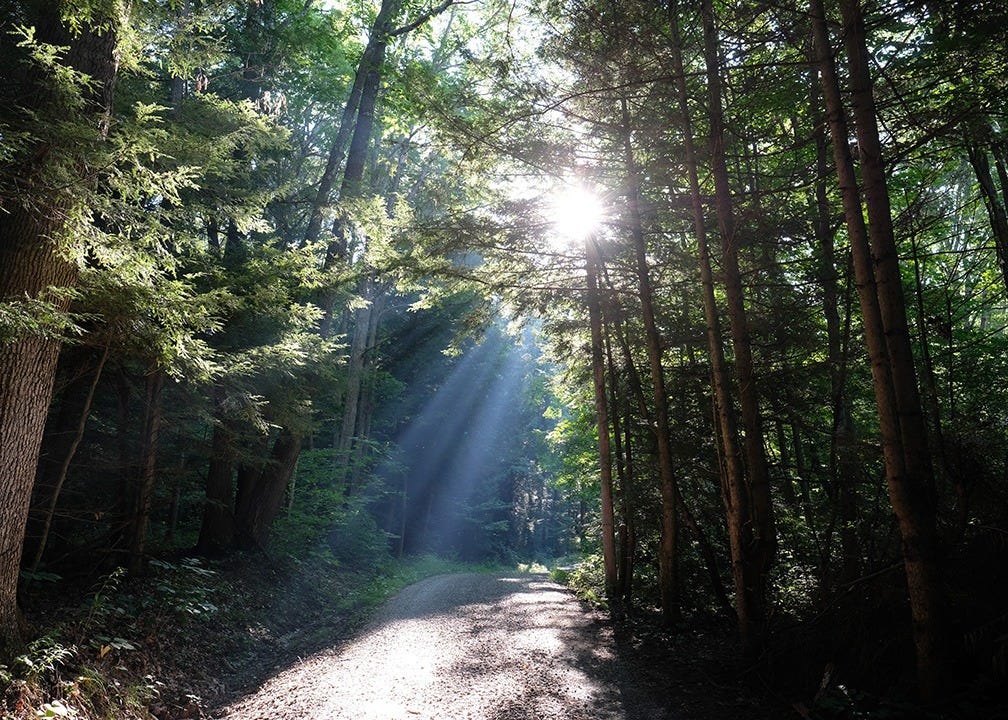
My wife and I live along the highway end of a little country lane that meanders up the hill a mile or so in Preston County, West Virginia.
This gravel road is one lane, usually muddy, steep in sections and has two curves and one low, stinky section that crosses a stagnant rivulet. Residents maintain it, including plowing the snow, fixing the ruts and spreading the gravel.
Counting our house, there are three stick-built houses, five occupied mobile homes, a camper, and two manufactured homes that are for sale. Overall, storage buildings, garages and sheds outnumber dwellings.
About a dozen souls comprise this community as of the summer of 2025. The feral cat population is three times that of the human census.
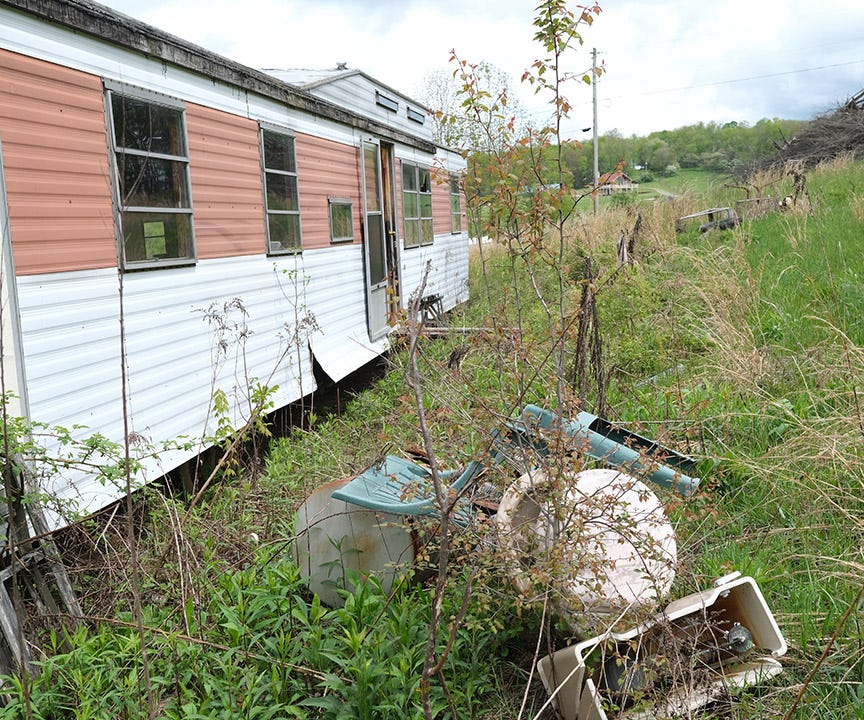
It is a microcosm of Appalachia. At the far end of the lane is a new, beautiful log home with a huge garage/workshop set amid acres of nature preserve and meadows. It is off the grid with a large array of solar panels and a geothermal heating system. A few hundred yards from it is a deserted mobile home, furnishings strewn in the weeds.
Extreme contrasts like this are common in rural West Virginia. There are no “poor” or “rich” sections, only haphazard development. Neighborhoods just happen. Space, heritage and freedom are the common threads.
On one side of the lane live three retired brothers who grew up on this land; on the other side, the residents are relatives. I and our closest neighbor are outsiders to these clans.
There are two common grounds to this neighborhood: a row of mailboxes at the end of the lane and a corner of our front yard at the end of our driveway. The latter is where we and our neighbors deposit bags of trash and empty Amazon boxes on Sunday evening and early Monday morning. The sanitation company won’t go up the lane to the individual houses, so our yard is the designated collection spot.
After nearly five years of living here, our mixed-breed dog, Edison, still becomes agitated when folks arrive with their trash bags stacked in the beds of their pickups and ATVs. Edison throws another fit when the white trash truck arrives to compact and remove these leftovers of American consumption.
He also barks at the UPS and FedEx delivery trucks, and the neighbors who come from up the lane in their pickups, quads and ATVs to see if the mail has run yet. One resident told me that, back when Jim had the route, you could count on your mail being in the box by 10 a.m. Now, it arrives between 1 p.m. and never. Recently, a greeting card sent certified mail from North Kingsville, Ohio, took 42 days to reach us, a distance of 240 miles. As I write this, a parcel mailed more than a week ago has, according to USPS tracking, mysteriously disappeared somewhere between here and the Carolinas.
It is running late, like the state income tax refund and payment for an article published three months ago.
There is definitely a slower pace to life south of the Mason-Dixon line, which is about five miles north of us at the Pennsylvania-West Virginia border. The pace is good for retired folks but would frustrate a northerner still trying to make a living. I left that world as soon as I turned 65 and signed up for Medicare. With a heart attack, aortic valve replacement, heart failure and a pacemaker in my recent medical history, my body paid its dues to the hectic pace of making a living. Chopping firewood, mowing our two acres and walking the woodland trails and lane have been my “cardiac rehab.”
I sense that even with my maladies, I’m still one of the healthiest residents of this lane. Ruth and I are the only walkers on it. Edison and I usually take at least one stroll daily; two in cool weather. There’s something (or some smell) about the lane that stimulates Edison to take care of business, so an evening walk is essential. I prefer the early morning strolls, especially if there’s a foggy sunrise. Now that my wife is retired and rising at 4:50 a.m. to pack a lunch and cook breakfast is not required, we do fewer sunrise walks.
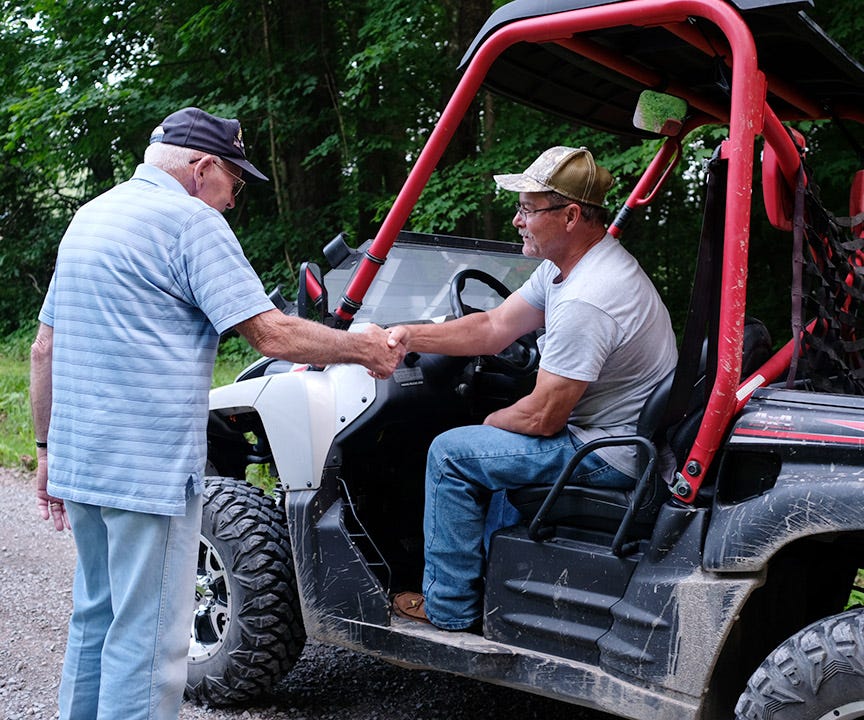
We rarely encounter a neighbor when we walk, and if we do, that person is in quad, golf cart or vehicle. We wave or nod, occasionally exchange small talk, then return to our wandering. Besides, as an INFJ with profound hearing loss, anything more than a nod or wave induces anxiety.
The walk itself is relaxing and relatively scenic, even though human intrusion pocks the landscape. Most notable are the electrical transmission lines and accompanying right-of-way that claim a wide swath through the forest, pasture and meadows toward the upper end of the lane. We pause here to give Edison a chance to roll in the grass, sniff the air and weeds for the scent of wildlife and enjoy the breeze, something we rarely get at our end of the lane.
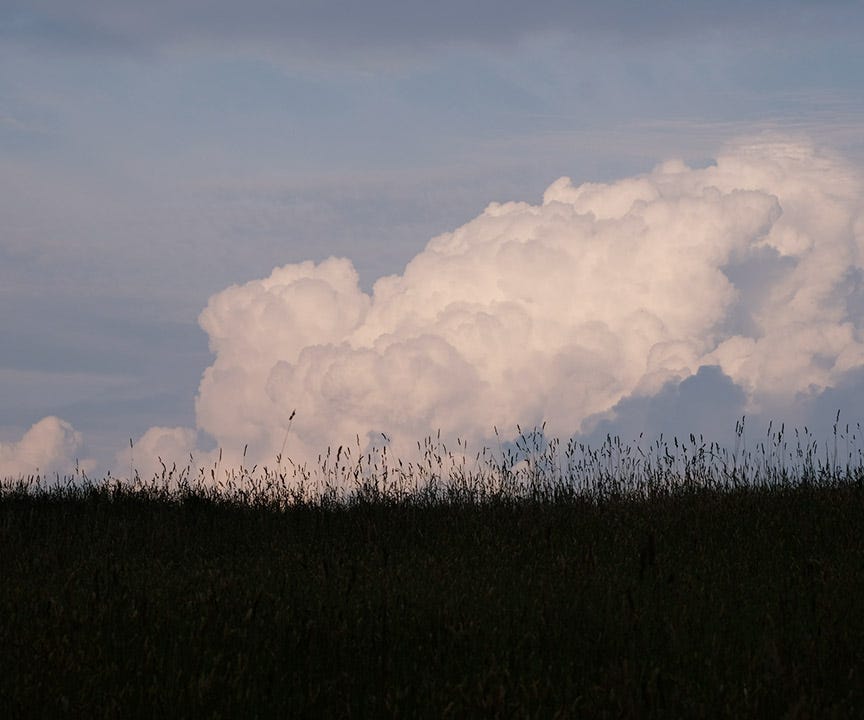
When the wind is strong, billowing clouds parade across the meadow, a procession I find much more entertaining than those of vehicles, clowns and marching bands.
I reckon that I’ve made nearly 800 excursions up this lane since first coming here almost five years ago. This lane is as familiar to me as the road that I drove to work each day for nearly 30 years. Eventually, this lane will also become but a memory. It has already enshrined a few of them in my mind:
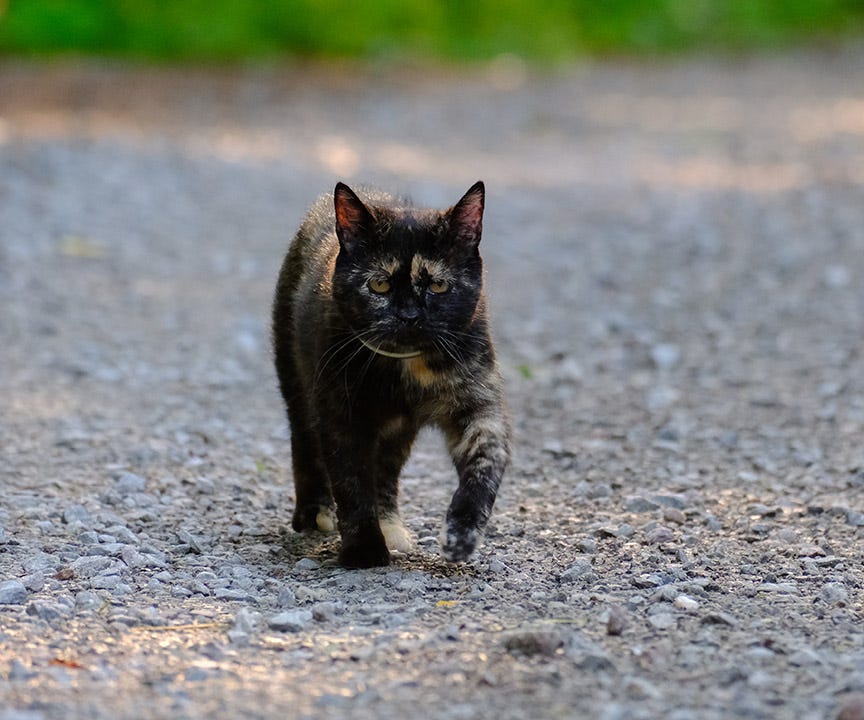
The feral cat we named “Coco,” who we tagged along with us on our walks;
The downpour that swept across the lane just as we reached the top;

The summer of 2022, when swallowtail butterflies flocked to the ironweed and joe pye weed. They have not bloomed like or attracted butterflies since;
The morning Edison and I came within a few feet of a deer and its newborn fawn;
The time Edison spotted a feral cat and jerked the leash so hard that I fell backwards, hit my head on a big rock and walked home with blood oozing from the wound;
The neighbor who always waved to us from her wheelchair while enjoying the pavilion her husband built for her. She is gone now, and her husband has moved on to his daughter’s and son-in-law’s farm. His place is for sale;
The two handsome steers our neighbor pastured last summer. We named them Lum and Abner; the sight of the livestock trailer going up the lane to take them to their fate at the slaughterhouse still haunts me.
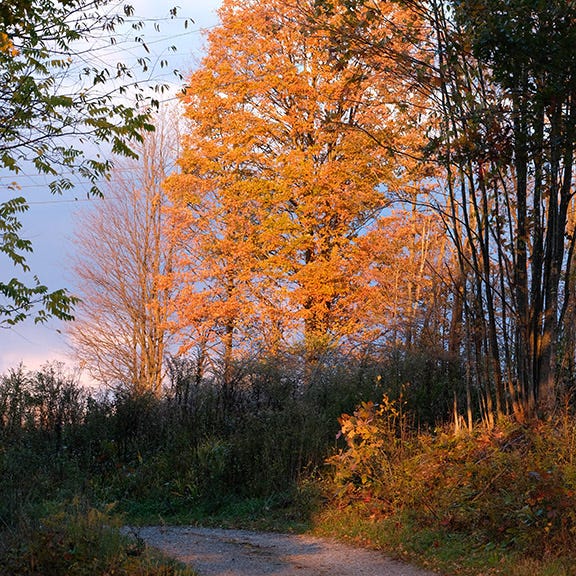
This is the neighborhood in which we live, in which I write my books and spend these sunset years of my life. I consider myself blessed to be here. I spent 65 years dreaming of and pursuing relocation from Ohio to the mountains of West Virginia, its myriad lanes and hollers. I spent nearly 40 years of those years as a freelance journalist disappearing down back roads to find stories for Goldenseal magazine.
Now, I live on one of them.
Thank you for wandering them with me. I will be sharing many more stories from these back roads on Substack. My online bookstore has four volumes of these stories, as well as other books.