
The Unthinkable Happens
Sale of Blackwater Canyon was a catalyst for its protection

Note: This is part two of a series of posts about the Friends of the Blackwater and its efforts to save the Blackwater Canyon.
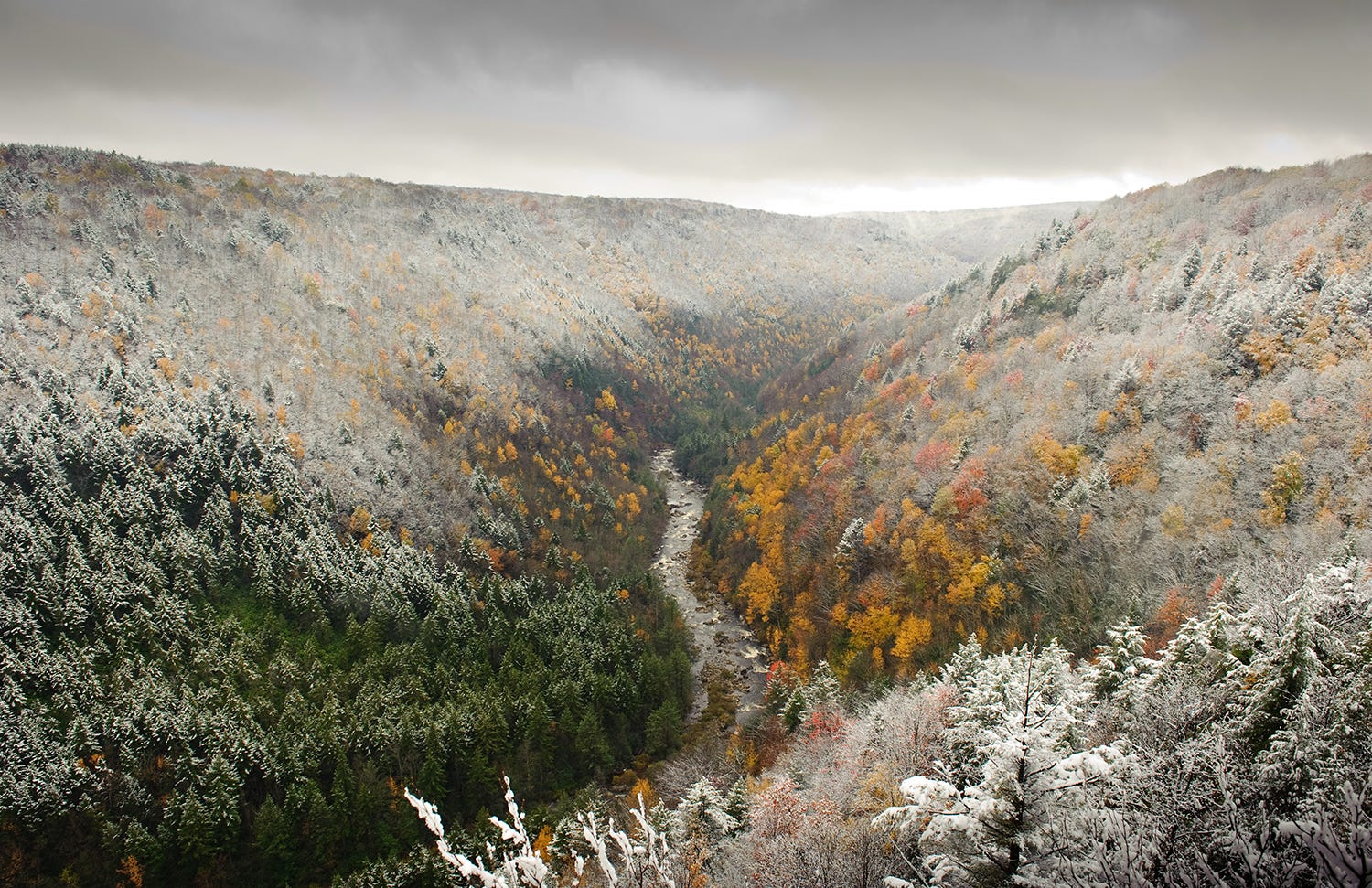
In February 1997, Petersburg logging company Allegheny Wood Products (AWP) quietly purchased the Blackwater Canyon in Tucker County, sending ripples of fear through the community and environmental groups. The threat of exploitation that had decimated the canyon’s timber resources a century earlier became very real as details of the deal became known.
Discussions for a $3.5 million sale to the Conservation Fund had been ongoing with the land’s owner, Allegheny Power Co. But the utility suddenly sold the canyon to developer Brian Black for $4.7 million. Within hours, Black flipped the land to AWP for $5 million.
In an interview with Mary R. Furbee for The Washington Post, Judy Rodd stated, “The sale really shocked a lot of people. The landscape is so rugged that it would be violently degraded by extractive industries, and there’s always the chance that it could be developed after it is logged.” In the same article, AWP owner, John Crites, stated that his company was surveying the land and had no comment on future plans.
By January 2000, however, AWP already had logged about 1,600 acres of the canyon and was planning to cut 235 acres on the northern rim. As a result, the rail trail used by hikers was closed to this traffic due to helicopters flying above the work area. That spring, Judy, in a Viewpoint piece published in The Charleston Gazette, wrote that Crites was threatening to bring criminal charges against people using the canyon hiking trail, the former Western Maryland Railway grade. The centerline of the trail marked the boundary between AWP’s land and that of the Monongahela National Forest.
Judy wrote that Crites intended to use the trail for his logging operation in the canyon and posted a “Huge ‘No Trespassing’ sign (that) dwarfs the Forest Service notice that welcomes foot travelers to enjoy the canyon trail.”
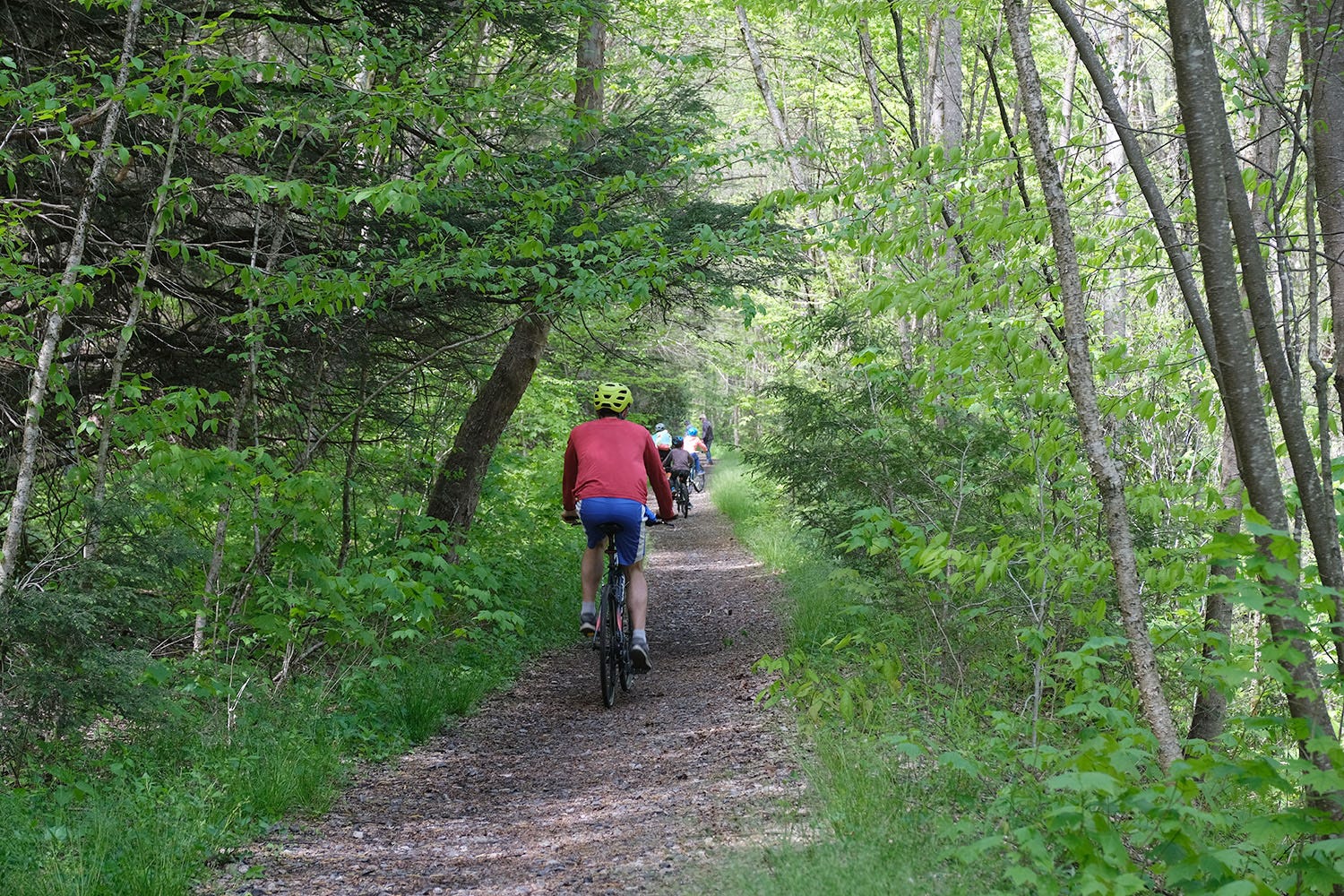
She and several other hikers walked the trail in defiance of Crites’ sign and were angered and ashamed by what they saw. “Our ‘Crown Jewel’ is being tarnished and sacrificed for private profit. How did we get into this mess—and how can we get out of it?” she wrote.
“For over four generations, the Blackwater Canyon has lain undisturbed, recovering from devastating turn-of-the-century logging. Today, after eight decades of regrowth, the trees in the canyon are just beginning to create a diverse, maturing forest habitat. But like sleek, year-old livestock, these marketable trees, many with centuries of life remaining in them, are also ripe for profitable, commercial logging,” Judy wrote.
The land trust that Judy directed launched in the spring of 1997 a campaign to “Save the Blackwater Canyon.” She recognized that the canyon was essential to Tucker County’s identity and outdoor-recreation tourism.
“. . . it makes no sense to destroy what draws people here in the first place,” she told Furbee in The Washington Post story.
The Sierra Club with support of the West Virginia Highlands Conservancy, challenged the sale. Basing their challenge on a monopoly (the power company) selling property without a requisite hearing by the Public Service Commission, the case went to the state supreme court. The court ruled against the conservation groups. Judy, who was vice-president of the Conservancy at the time, had just begun to fight.
From foes to friends
Friends of the Blackwater (FOB) was formed in 2000 as a non-profit conservation organization “dedicated to protecting the unique ecology, scenic landscapes, outdoor recreation opportunities, mountain communities and cultural heritage of the High Allegheny Mountains of West Virginia.” This work would be done “through public outreach, advocacy, and environmental restoration. FOB also supports sustainable economic development across the region.”
FOB’s first office was in Asbury Methodist Church in Charleston, where Judy’s husband, Tom, was working at the time. The office was a portal to the state government and provided a perch for observing further developments on plans for the landscape.
Fueled by fears that the new owners’ work might encroach upon the views from Blackwater Falls State Park, a crown jewel of the system, several victories were won in the early 21st century. In 2000, 150 acres were added to the state park under Cecil Underwood’s administration. Two years later, Governor Bob Wise purchased from Allegheny Power 500 acres upstream from the falls, thus connecting the park to the town of Davis.
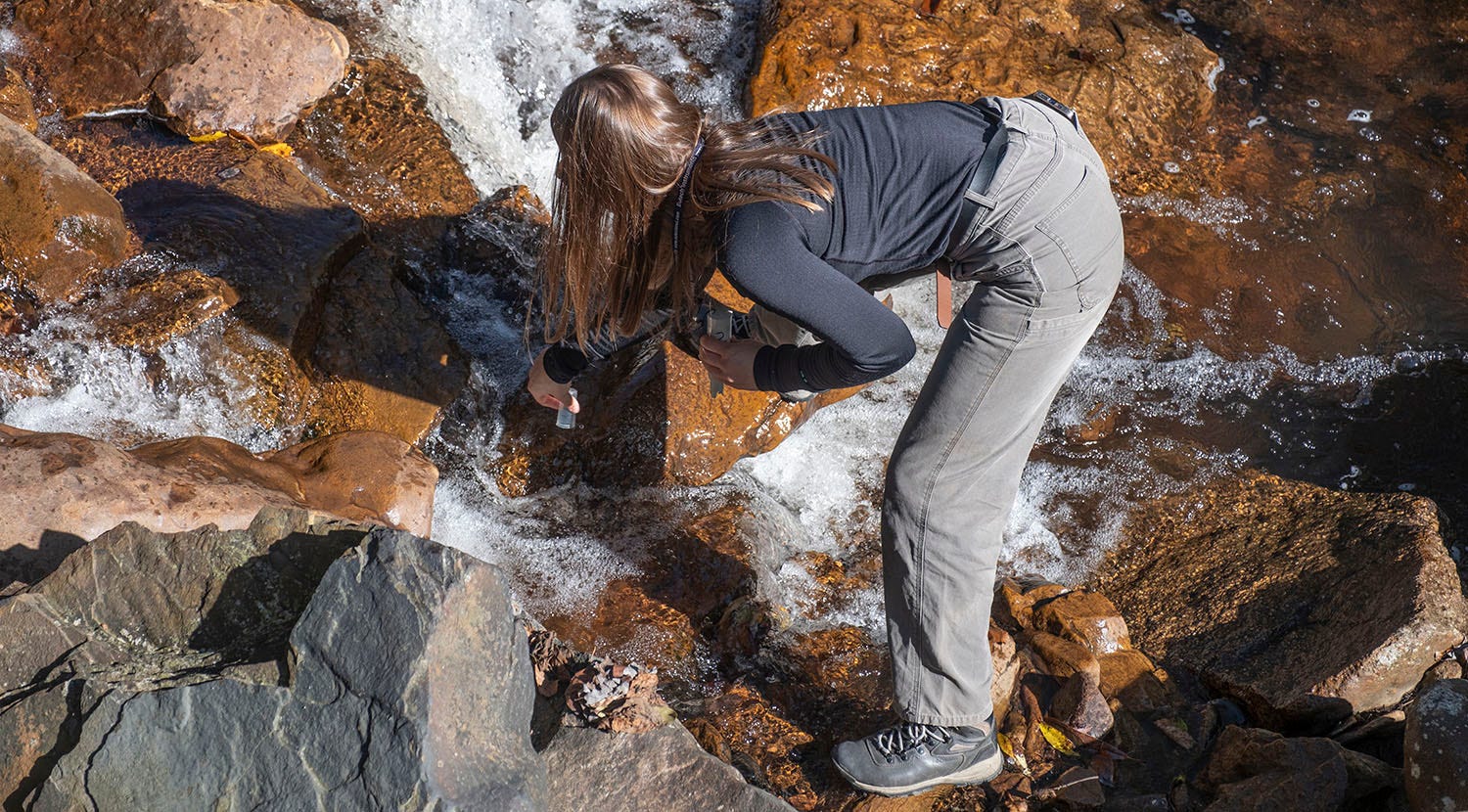
As the fledgling FOB examined the threats to the Blackwater watershed, the problem of acid mine drainage (AMD) came to the forefront. Abandoned deep and strip mines along the North Fork of the Blackwater were spewing orange, acidic toxins that stained the rocks and created an unhealthy environment for aquatic life. Beaver Creek near Davis, Mine Portal 29, Long Run and Tub Run were identified as major sources of AMD pollution.
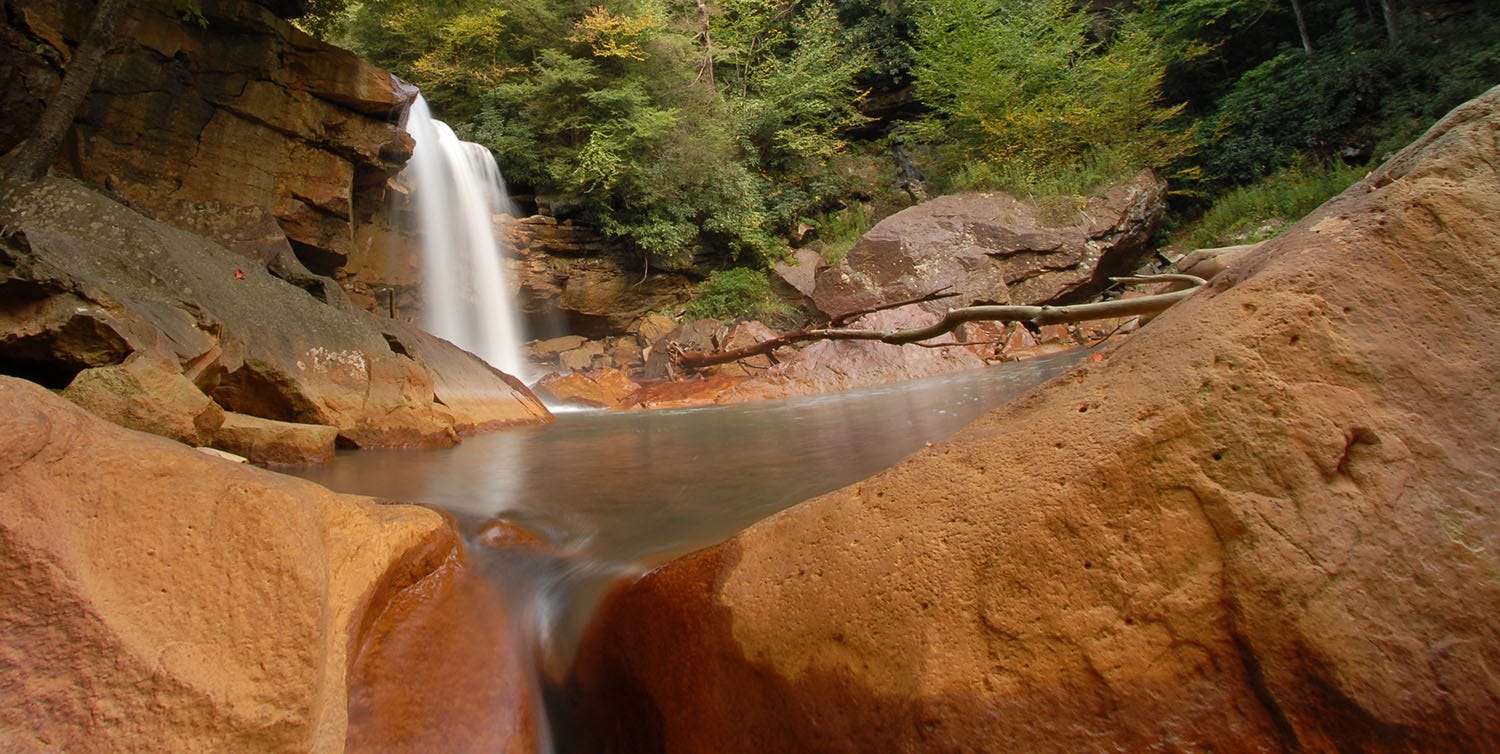
In 2002, FOB set up a second office on William Avenue in Davis to deal more directly with the issue. Eventually, all FOB work was moved to Tucker County after Tom’s work in Charleston concluded.
“Acid mine drainage is the formation and movement of highly acidic water rich in heavy metals. This acidic water forms through the chemical reaction of surface water (rainwater, snowmelt, pond water) and shallow subsurface water with rocks that contain sulfur-bearing minerals, resulting in sulfuric acid. Heavy metals can leach from rocks that come --in contact with the acid, a process that may be substantially enhanced by bacterial action.
The resulting fluids may be highly toxic and, when mixed with groundwater, surface water and soil, may have harmful effects on humans, animals and plants.”
U.S. EPA
“Off and on, we were in Charleston for close to 20 years,” Judy said. “We would come home every weekend. Many times, we’d come home, open the mail, see a nice book that I ordered and put it in the closet,” Judy said. “When we finally moved back there in 2013, we wanted to open those closets and see what was in them.”
FOB recruited a core of volunteers who put muscle and time behind projects that made the canyon trail more accessible and attracted more “friends.” Many of these supporters lived in the Washington, D.C., northern Virginia and Pittsburgh regions; they were trail users, vacation home owners and frequent visitors to Thomas and Davis. Some had never heard of the magnificent canyon beyond the waterfalls, but FOB’s campaign raised awareness of the region’s “backstories” and tragic story of late 19-century exploitation. FOB’s work resonated with locals, as well, through the group’s heritage projects, signage and theatrical performances.
Saving Ginny
Starting with less than $100,000 in annual funding, FOB aggressively pursued grants and donations to pay for legal action, promote the canyon and honor the heritage of the greater Blackwater community. Although Tom Rodd is quick to give credit to Judy for her work in FOB, Judy said he was the grant writer for many of the projects for which Friends sought funding.
“He’s a great writer,” Judy said. “We probably do 10 grants a year. “I’m not the greatest writer, but I can write the outline of what I think should be said, what is going to appeal to them by understanding what they are interested in.”
Judy leveraged the power of partnerships and grants at all levels of influence, from local citizens to state and federal legislators, from Tucker County civic groups to The Sierra Club. Joe Manchin was secretary of state when the organization at the time FOB was formed and became governor in 2005. Manchin, in his remarks at the Canyon Celebration, said he recognized at the time that the sale “was not right” and in his position as governor and then senator worked to find funding for public ownership. Despite his present and persistent efforts on the state level, the Friends’ best allies in those years turned out to be a squirrel, snail and salamander.
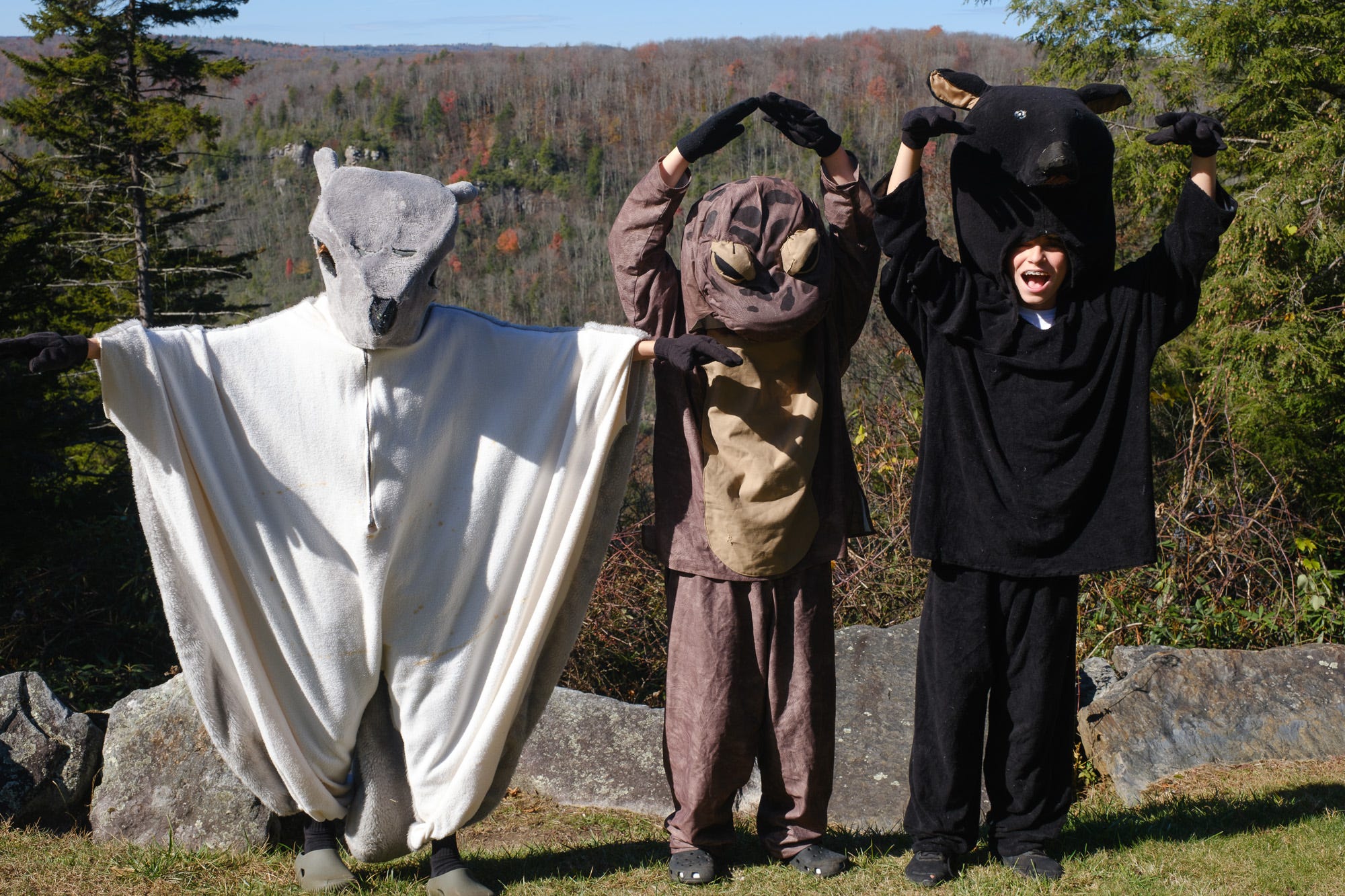
“. . . the Sierra Club found these old records of an endangered species in the canyon. And they alerted the Fish and Wildlife Service,” Judy said. Allegheny Power was given notice by the Fish and Wildlife Service that the canyon could not be logged until a habitat conservation plan with an incidental take permit was in place. The Sierra Club also discovered that AWP planned to build condos, put in water systems and “change the whole nature of the canyon” once the timber was cut.
The Sierra Club and FOB took legal action and hired a scientist from Wake Forest University to document the populations of West Virginia northern flying squirrels and Cheat Mountain salamanders in the canyon. Armed with that research, the groups had more leverage “to say they shouldn’t be logging,” Judy said.
Unfortunately, the judge assigned to the case was unsympathetic. “We did not win. We just came to an agreement that the lawsuit would stop. Otherwise, Allegheny was going to sue us. But they also, in that settlement, agreed to try to get an incidental take permit, which means you plan what you are going to do on the property and set aside some habitat for the creature. Then you log and avoid the habitat you set aside.”
Writing the document was AWP’s responsibility, and from 2004 forward the corporation presented to Fish and Wildlife plans that Judy called “bogus.” “Their approach was, well, just let us log and build houses and see it hurts anything. Rather than setting anything aside, they just wanted to do research,” she said.
Another critical point in the canyon’s history came when AWP wanted to use the canyon trail and other roads for their proposed logging operation. FOB and other groups publicized the issue and encouraged citizens to comment on the proposal.
“There were over 50,000 comment letters to the Forest Service saying, ‘Don’t turn the Canyon Rail Trail into a logging road,” Judy said. “That was exceptional. That typically doesn’t happen to that degree.”
In 2006 FOB adopted the W.Va. northern flying squirrel, given the moniker “Ginny,” as a mascot for their canyon-preservation work. Three years later, FOB began an educational campaign for the canyon’s bats, which were being decimated by white-nose syndrome. The battle with AWP dragged on into the early 2020s, when AWP sued Fish and Wildlife for not giving the corporation a plan. A federal judge in Elkins decided the case in favor of Fish and Wildlife.
“All along, we were teaching people about the flying squirrel, how unique it was, and how it ate truffles,” Judy said. “It didn’t sleep through the winter; it got up in the middle of winter and dug through the snow (looking for sustenance).”
Likewise, the Cheat Mountain salamander adapted to the canyon’s cold, high-elevation environment that other salamander species could not tolerate. The species most likely traveled south during the glacial period, then managed to adapt to the ongoing cold conditions that persisted in the canyon long after the glaciers retreated.
While none of these efforts individually saved the canyon, they collectively created a groundswell that brought pressure upon state and national politicians to bring the canyon under public ownership. Judy recalls FOB picketing the mansion of W.Va. Governor Cecil Underwood, who cut a deal with AWP to purchase the 40-acre Lindy Point and receive a donation of 85 acres across the canyon at Pase Point.
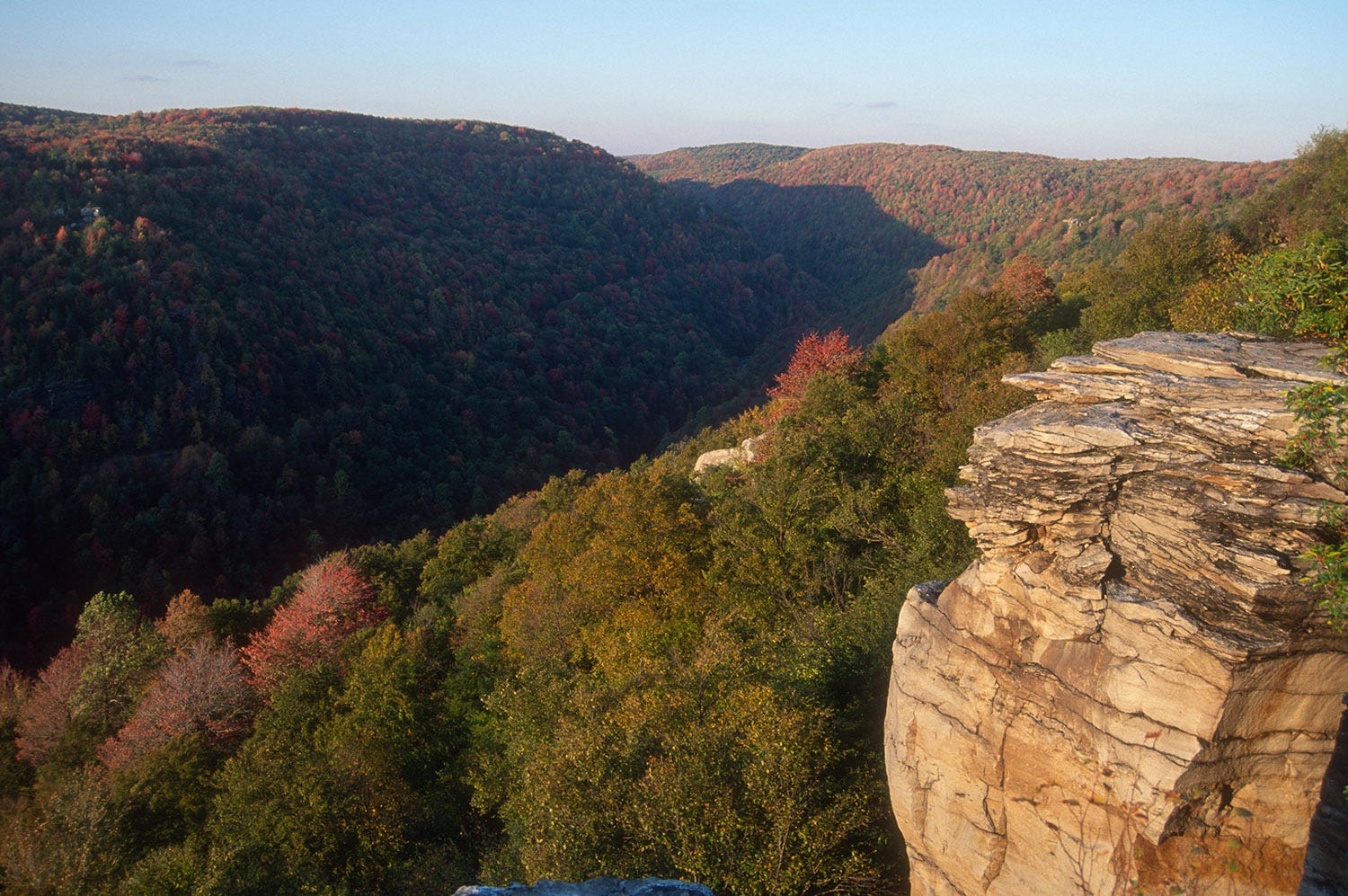
“And they took action,” she said. “It didn’t save the canyon, but it saved the gorgeous view from Lindy Point, which seemed like a mistake because when you stand at Lindy Point and look down the canyon, two-thirds of what you saw was Crites’ land. “So, just saving Lindy Point didn’t protect any of the view shed from the point.”
Continued in the next post.